

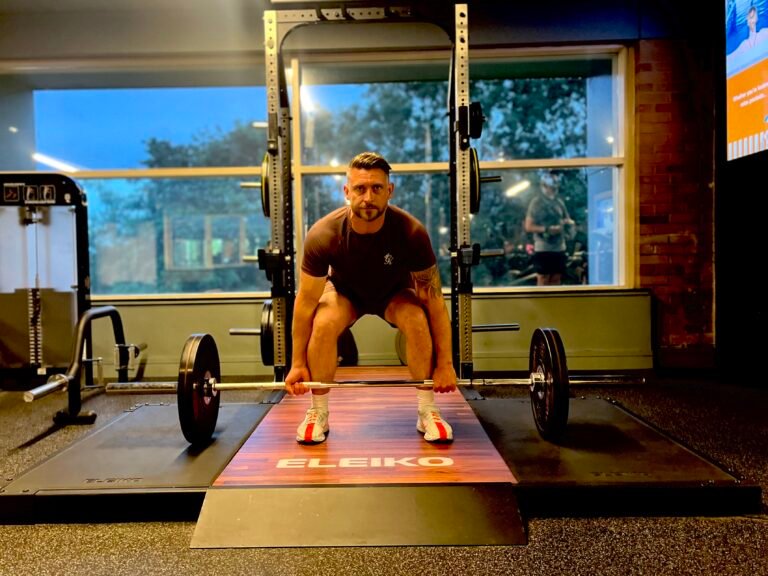
Losing your grip on deadlifts before your legs and back give out? Here’s why — plus the chalk, technique and grip-training fixes that sorted it for me.
Fitness
Is Flexing Bad for Your Muscles? Unraveling the Truth!

Flexing is more than just showing off — it’s a legitimate form of isometric training that can boost muscle activation, improve definition, and even contribute to growth. But like any exercise, doing it wrong or overdoing it comes with risks. Here’s the science behind flexing and how to use it smartly in your training.
Unlocking the Mystery: What Are The Easiest And Hardest Muscles To Build?

Not all muscles respond to training the same way — some grow quickly with basic compound work, while others seem to resist every effort you throw at them. Understanding which category each muscle falls into can save you months of frustration and help you train smarter. Here’s the full breakdown from the easiest gains to the most stubborn muscle groups.
Can I Get Strong Without Compound Lifts? A Comprehensive Guide

Compound lifts are effective — but they’re not the only route to building real strength. Whether you’re dealing with an injury, limited equipment, or simply personal preference, there are proven alternatives that can deliver serious results. Here’s what the science says and how to build your programme without compound lifts.
Push Your Limits: Discover the Rule of Thumb for Estimating Your 1 Rep Max
Your one-rep max is one of the most useful numbers in strength training — it tells you exactly how hard to push for your specific goal, whether that’s muscle growth, power, or strength. But you don’t need to max out to find it. Here’s the rule of thumb formula, how to calculate it, and how to put it to work in your training.
Is it Possible to Look Muscular but Be Weak? Unraveling the Fitness Paradox

It sounds contradictory, but looking muscular and actually being strong are not the same thing. From training that prioritises size over function to underlying health conditions like thyroid disorders and neuromuscular disease, there are real reasons this paradox exists. Here’s what’s behind it and why it matters more than just aesthetics.
One-Sided Dominance: Do You Have a Better Mind-Muscle Connection On One Side?

If one side of your body feels more connected and stronger during exercises, you’re experiencing a very common phenomenon — and it’s worth addressing before it creates lasting muscle imbalances. Dominant side bias and old injuries are the usual culprits. Here’s what causes a one-sided mind-muscle connection and how to even it out.
The Strength Showdown: Do Women Have Stronger Legs Than Men in General?
The idea that women have stronger legs than men is a popular claim in fitness circles — but the reality is more complex. While women do carry more muscle mass proportionally in the lower body, that doesn’t automatically mean greater strength. Here’s what the science actually shows about lower body strength differences between men and women.
The Ultimate Guide: How Often Should You Max Out Lifting Weights?
Maxing out is one of the most useful tools in strength training — but do it too often and you’re asking for injury, fatigue, and stalled progress. Most lifters should be testing their true 1 rep max every three to four months at most. Here’s everything you need to know about frequency, the risks of overdoing it, and safer alternatives for measuring progress.
Tackling Workout Fatigue: Why Am I Too Tired to Finish My Workout?
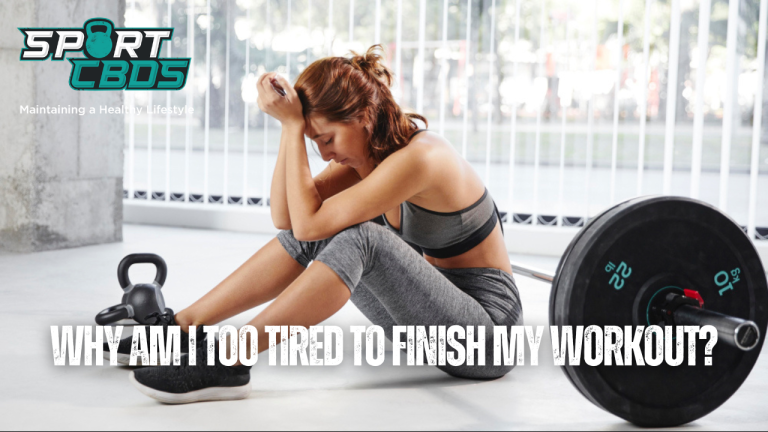
Hitting a wall halfway through your workout isn’t just a motivation problem — it’s usually your body flagging something that needs addressing. Poor sleep, inadequate calories, overtraining, and stress can all drain your energy before you even finish warming up. Here’s a practical guide to identifying what’s draining you and how to fix it so you can actually complete your sessions.