Why Do I Lose Grip When I Deadlift? (Causes and How to Fix It)
Few things are more frustrating than a deadlift where your legs and back have plenty left in the tank, but the bar slides out of your hands anyway. If your grip is the thing failing first, you’re not weak — you’ve just found your weak link. And the good news is that grip is one of the most trainable, fixable parts of the whole lift.
Here’s why it happens, and exactly what to do about it.
Why Do I Lose Grip When I Deadlift?
Your grip fails before your back and legs because the muscles in your hands and forearms are much smaller than the big movers doing the pull — so they fatigue first, even when you’ve got plenty of strength left elsewhere. On top of that, grip is partly about friction and technique: sweaty hands, a smooth bar, the wrong grip style, or a sloppy hand setup will all let the bar escape before your muscles ever give out. Fix those things — and train your grip directly — and the problem largely disappears.
Why your grip fails on deadlifts
1. Your grip is simply the weak link
The muscles in your hands and forearms are small compared to the glutes, hamstrings, back and legs driving a deadlift. They also tend to be the least directly trained. So as the weight climbs, they reach their limit first — not because you’re weak, but because they’re the smallest link in a very strong chain.
2. Your grip style
The grip you use makes a huge difference:
- Double overhand (both palms facing you) is the most natural but the weakest — as the weight gets heavy, the bar tends to roll out of your fingers.
- Mixed grip (one palm facing you, one facing away) stops the bar rolling and lets you hold far more.
- Hook grip (thumb pinned against the bar, fingers wrapped over the top of it) is the most secure of all, though it takes some getting used to and can be uncomfortable at first.
If you’re failing on a double overhand grip, that alone is often the culprit.
Related: Why Do I Feel Pull-Ups in My Forearms?
3. Sweaty hands and no chalk
Grip is partly friction. Sweaty palms on a smooth bar will slip no matter how strong your hands are. A bit of chalk dramatically increases friction and is the single easiest fix most people are missing.
4. The bar itself
Bars aren’t all equal. A worn, smooth, or thicker bar gives your hands less to bite into. If your gym’s bar has lost its knurling, your grip will fail sooner than it would on a sharper, standard-diameter bar — and that’s not your fault.
5. You’re not training grip directly
Most people never train their grip on its own — they just hope it keeps up with everything else. It won’t. If grip is your limiter, it usually means it’s been neglected as a trainable quality in its own right.
6. Your hand setup
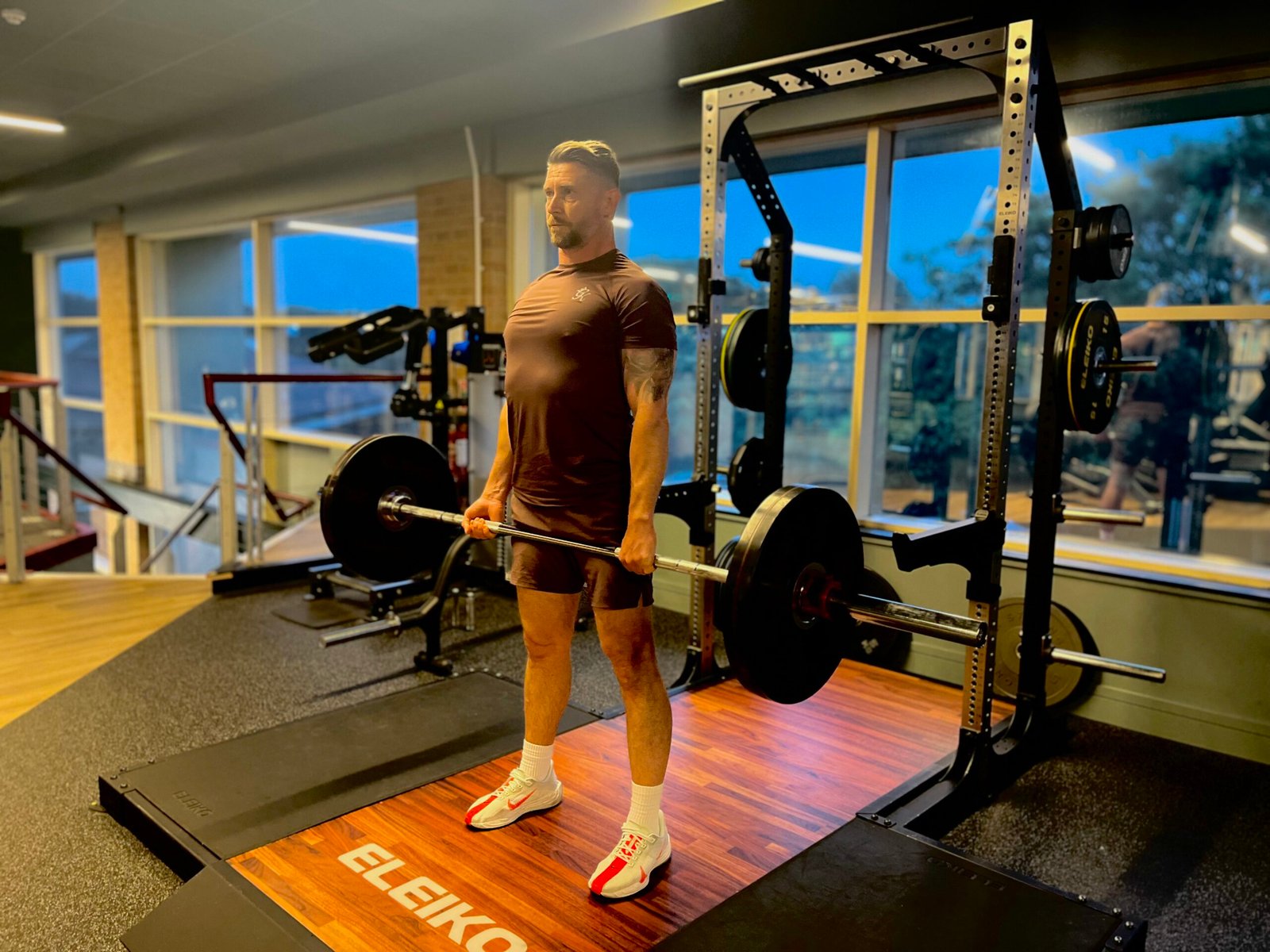
Where the bar sits in your hand matters. Let it ride too high in your palm and it’ll roll and slip as you pull; set it lower, where your fingers meet your palm, and grip it deliberately before you break the bar off the floor. A passive, sloppy setup loses you the lift before it’s begun.
How to fix it
The fixes follow directly from the causes: train your grip as its own thing, use chalk, choose a more secure grip style, set your hands properly, and use straps strategically (more on those below). Grip responds well to direct, consistent work — it’s one of the most improvable weak links there is.
There was a time when my own grip strength wasn’t where I wanted it to be. I’d lose my grip way too soon on most exercises, and it really held my gains back. It was frustrating watching it lag behind everything else.
So I took a deep dive into the world of grip strength. I started with the basics — forearm curls and reverse forearm curls. They helped a fair bit, but they still didn’t catapult me to the level I was after.
It was when I started using kettlebells that I really saw gains. For me, this one piece of kit made the difference, and I’d recommend them for anything from swings to farmers’ carries to the clean and press — basically any form of kettlebell workout. As you may or may not know, a kettlebell doesn’t have a central balancing point like a dumbbell; the weight is offset, which means you have to work a lot harder to hold on and control this rascal!
I’m not plugging them for the sake of it, but I’ve got loads of kettlebell workouts over on my YouTube channel if you fancy a look: Sport CBDs on YouTube.
Once I’d built up some experience with kettlebells, I started using grip strengthener kits too — ace for the days I wasn’t at the gym. I could smash out a hundred reps with one, and it doubled up as a little game, always trying to beat my last score.
That’s actually what gave me the idea to put everything I’d learned into a grip strength book, to help others whose grip isn’t where they want it to be. It covers what grip strength actually is, why it matters, and exactly how to improve it — with workouts and everything else you need to really get a grip on your grip.
If you want the full system rather than just the highlights, you can grab it here: Iron Grip — instant download.
Related: Forearm Pain When Doing Lateral Raises?
A word on straps
Straps are a tool, not cheating — but they’re easy to over-rely on. Used well, they let you overload your back and legs on your heaviest or highest-volume sets when grip would otherwise cap you. Used for everything, they stop your grip ever needing to get stronger, so the problem never goes away.
Personally, I’ve never really used straps — mainly because I’m on the mature side and I don’t lift heavy enough to need them; my own grip handles my deadlifts just fine. I know plenty of guys at the gym who use them, but they’re lifting heroic numbers, the kind that genuinely call for straps.
That said, there’s a lot to be said for chalk, especially when you’re lifting heavier or your grip strength is lacking. There’s nothing worse than feeling the bar start to slip out of your hands because of clammy palms! Personally, I’d take chalk over straps every time — but that’s just me. Straps work fine, I just don’t like using them, because it’s easy to get too reliant on them. Take the time to build your grip strength, people.
I know there’ll be some haters out there waving their straps at the screen as they read this — but hey, go ahead and use them! If they help you and you’re seeing the benefits, crack on.
FAQs
Should I use straps for deadlifts?
They’re a legitimate tool, not a sign of weakness — but don’t let them do all the work. The sensible approach is to train your grip raw most of the time and save straps for your heaviest top sets or high-rep volume work, so you keep building grip while still loading your back and legs hard.
Mixed grip or hook grip — which is better?
Mixed grip is the easiest secure option and works brilliantly, though it’s slightly uneven, so alternate which hand faces which way and be cautious at maximal loads (the underhand arm’s bicep takes more strain). Hook grip is the most secure and symmetrical but takes time to get used to and can be sore early on. For most lifters, mixed is perfectly good; many competitive lifters favour the hook.
How long does it take to improve grip strength?
With consistent, direct grip work, most people notice a difference within a few weeks, and meaningful gains over a couple of months. Like anything, it’s about regular, progressive effort rather than the odd hard session.
Does grip strength matter outside of deadlifts?
Massively. A stronger grip carries over to pull-ups, rows, carries and almost everything you hold, and grip strength is closely tied to overall strength and general physical health.
Related: How Often Should You Train Forearms?
Final thoughts…
If your grip gives out before your back and legs on deadlifts, it’s not a flaw — it’s just your weakest link asking for attention. Sort your grip style, use chalk, set your hands with intent, train your grip directly, and bring straps in strategically rather than leaning on them. Do that, and the bar will stay where it belongs: in your hands, all the way to lockout.
If you love training and want to get stronger — in body and mind — you’re in the right place. Here at Sport CBDs we train hard and do things properly, and there’s plenty more where this came from across the site.