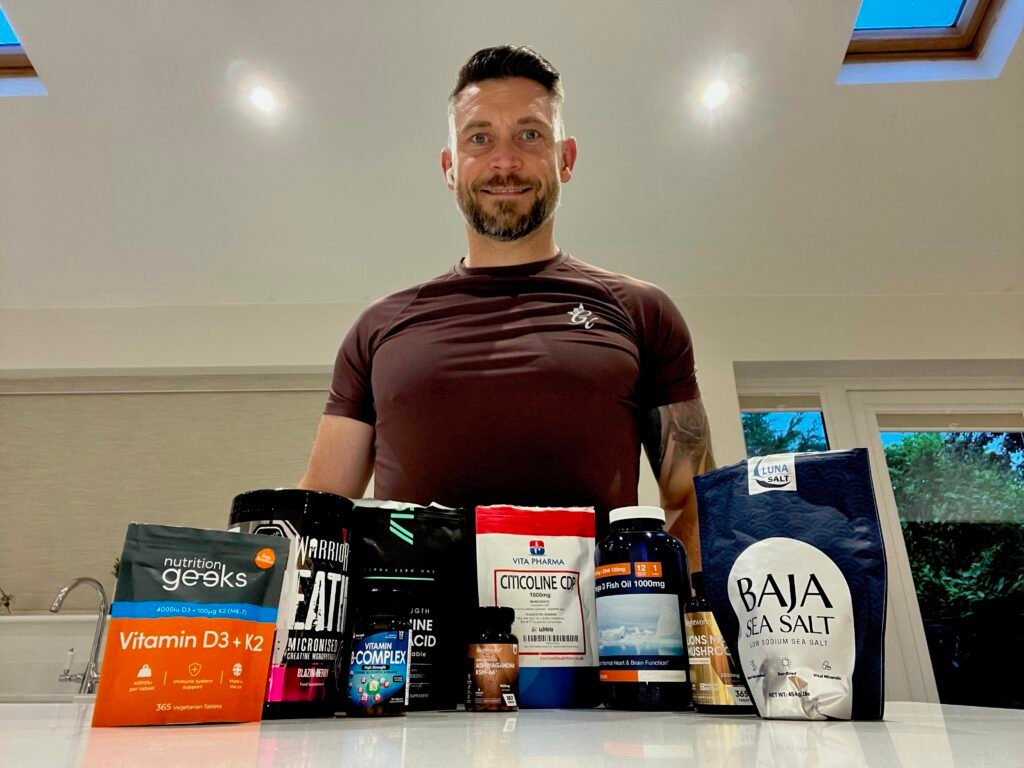
People have been asking me about this for a while now, so I figured it was time to just lay it all out. No fluff, no trying to sell you something you don’t need — just exactly what I’m currently taking, when I take it, and the honest reason behind each one.
I’ve been training for over 20 years. I’m a qualified Sports Massage Therapist. I’ve tried a lot of things over the years, and what I’m doing now is what I’ve landed on after stripping back the nonsense and keeping what actually works for me. Your body is different to mine, so take this as a conversation starter rather than a prescription.
Let’s get into it.
5:00 AM — The Morning Stack (Pre-Fasted Training)
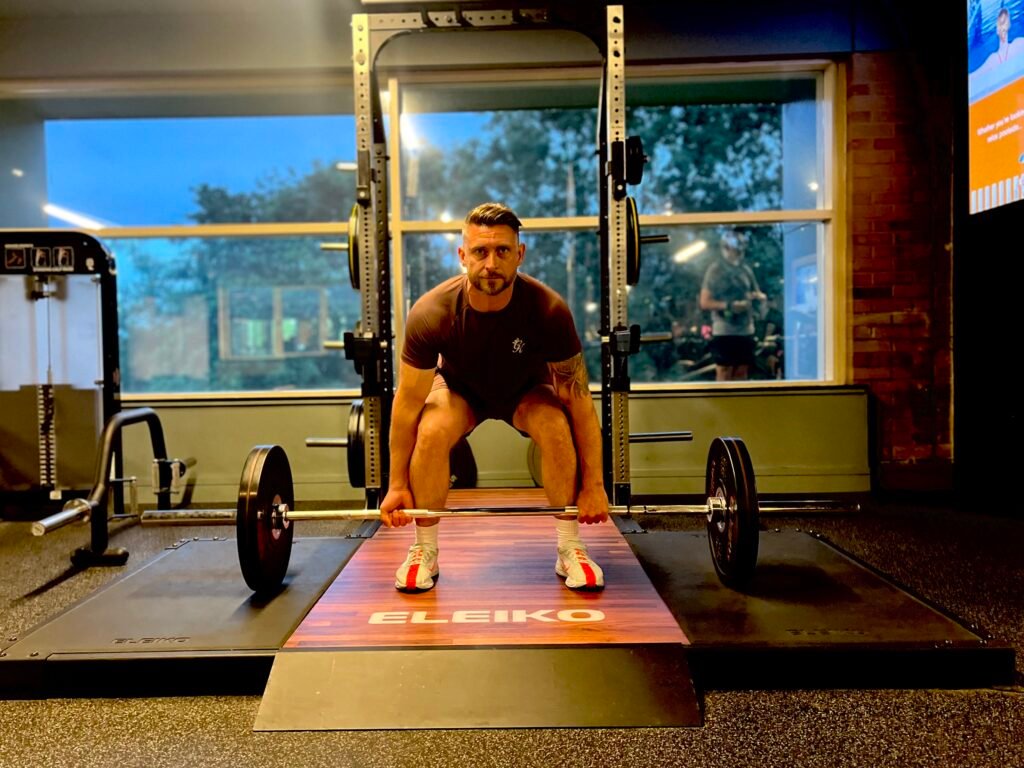
I train at 6am, fasted. That means whatever I take at 5am needs to prep me without breaking the fast or sending me into a caffeine spiral. Here’s what that looks like:
Black Coffee
Simple. One cup. I’m not fancy about it. Coffee before a fasted session gives me the mental and physical kick I need without loading calories. It also stacks nicely with L-Theanine (more on that in a second).
Baja Gold Salt — ¼ tsp in 500–750ml water
This one surprises people. I add a small amount of Baja Gold mineral salt to my morning water before training. Training fasted means you haven’t been hydrating overnight, and electrolyte balance matters more than most people realise — especially for performance and avoiding that flat, weak feeling mid-session. This takes care of it without overcomplicating things.
L-Theanine — 100–200mg
Taken alongside the coffee. L-Theanine is an amino acid found naturally in green tea, and paired with caffeine it smooths out the energy — less jitteriness, more calm focus. If you’ve ever had a coffee and felt wired and scattered, L-Theanine is the fix. I notice a real difference on days I skip it.
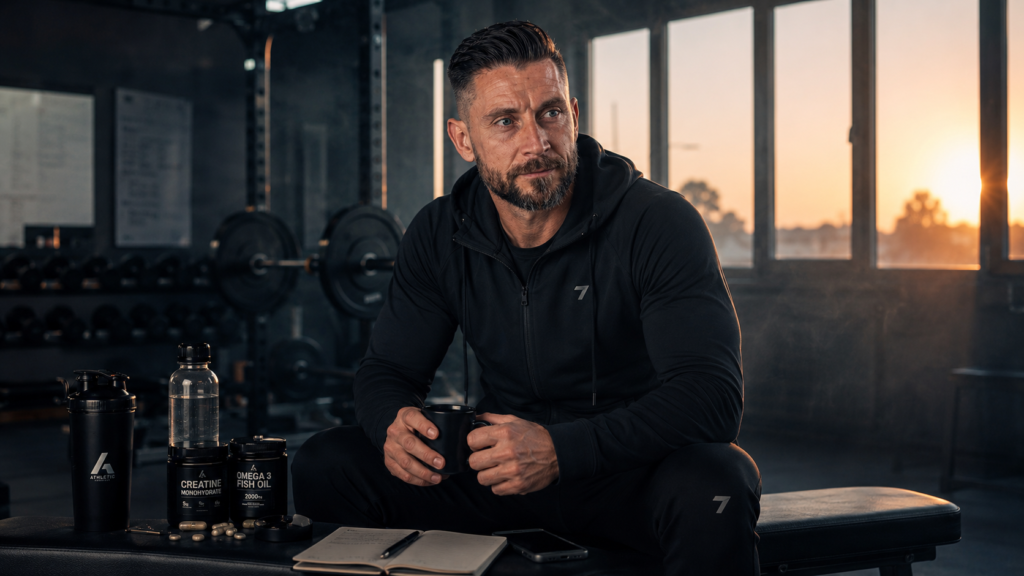
Creatine Monohydrate — 5g
The most researched supplement in existence. I take it daily, and I’ve been doing so for years. It supports strength, power output, and recovery. There’s no cycling needed, no loading phase required — just 5g a day, every day. If you’re not taking creatine and you train seriously, this is the one I’d tell anyone to start with.
Citicoline — 250mg
This is my cognition supplement. Citicoline supports brain function, focus, and mental energy. I use it mainly on weekdays when I need to be sharp — work, content creation, coaching. It’s not a stimulant, it’s more like giving your brain quality fuel. I’ve found it genuinely useful for staying focused through the afternoon slump.
10:00 AM — Break-Fast Meal + Main Supplement Window
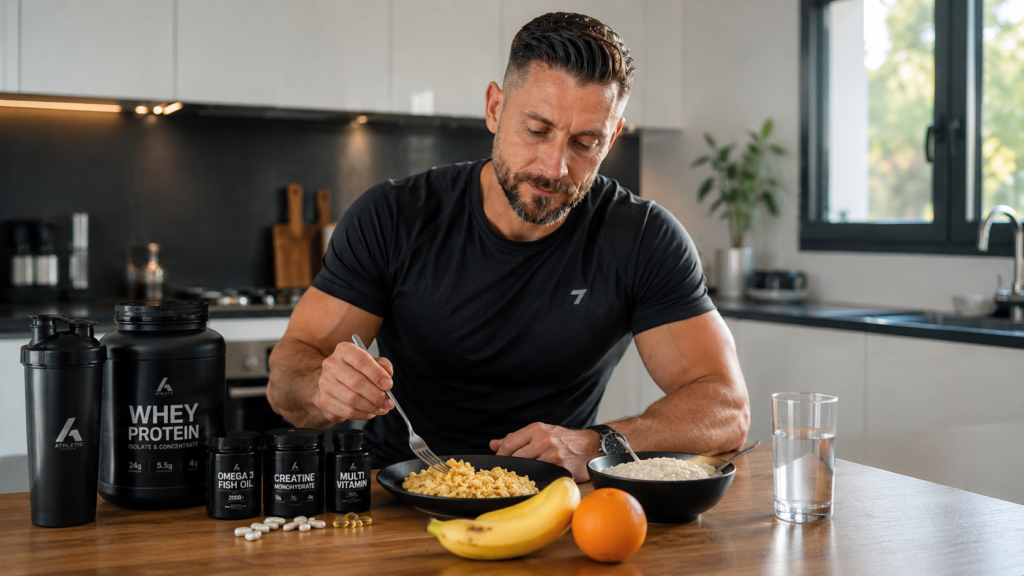
I break my fast around 10am with a proper recovery meal: banana, peanuts, 5 eggs, protein rice pudding, and an orange. Sounds like a lot — it is, intentionally. This is the meal where I take the bulk of my supplements, most of which benefit from being taken with food and fats.
Lion’s Mane — 500–2000mg
Lion’s Mane is a medicinal mushroom with solid evidence behind it for brain health, memory, and nerve growth factor support. I take it with my first meal. This one has become a staple for me — particularly as someone who’s producing a lot of content and needs to stay mentally switched on.
Omega-3 Fish Oil — 1000–2000mg
Heart health, brain health, joint health. Omega-3 is non-negotiable for anyone who trains consistently, and especially for anyone doing physical work. Inflammation management matters. I take it with fats in the meal for better absorption.
Vitamin D3 + K2 — 3000–5000 IU D3 / 90–180mcg K2
Living in the UK, D3 is practically essential for most of the year. The K2 is the important pairing — D3 helps absorb calcium, K2 directs it to your bones rather than your arteries. Taken with fats again for maximum uptake. I notice mood, energy, and general wellbeing differences when my D3 is where it should be.
Vitamin B Complex — 1 serving
The B vitamins cover energy metabolism, stress support, and nervous system function. As someone juggling training, work, content creation, and building things on the side — stress support isn’t optional. B Complex keeps the engine running cleanly.
Critical Greens Powder — 1 scoop
I use this as nutritional insurance. Even with a solid diet, I don’t always hit every micronutrient consistently. A quality greens powder fills those gaps. It’s not a replacement for real vegetables — think of it as a belt-and-braces approach to making sure I’m covered.
Collagen Peptides — 10–20g
This one’s particularly relevant given my Sports Massage background. Tendons, joints, connective tissue — they take a beating over 20+ years of training. Collagen peptides support all of that. The orange in my break-fast meal is no accident either — vitamin C significantly enhances collagen synthesis, so pairing the two is intentional.
1:00 PM — Afternoon
Ashwagandha — 300–600mg
An adaptogen — meaning it helps your body adapt to and manage stress. I take it mainly on weekdays. Cortisol management is something most people training hard and living busy lives don’t pay enough attention to. Ashwagandha is one of the better-studied options for keeping that in check. I find it takes the edge off without making me drowsy.
5:00 PM — Dinner
Lean protein, vegetables, complex carbs. No supplement to report here — just real food doing its job. Recovery starts at the dinner table as much as anywhere else.
9:00 PM — Before Bed
Magnesium Glycinate — 300–400mg
If there’s one supplement I’d rate alongside creatine for consistent impact, it’s this. Magnesium Glycinate is a highly bioavailable form of magnesium that supports sleep quality, muscle relaxation, and overnight recovery. I sleep noticeably better when I take it. The glycinate form is gentler on the stomach than other forms like magnesium oxide. Take it 30–60 minutes before bed.
The Bottom Line
That’s the full picture. No magic pills, no shortcuts. Everything on this list serves a specific purpose — and most of it I’ve arrived at through years of trial, error, and staying close to the research.
If you’re just getting started and want one place to begin: creatine monohydrate and magnesium glycinate. Those two alone will make a measurable difference to your training and your sleep.
I’ll be sharing more about my current training plan in upcoming posts — including how I structure my sessions, what I’m focusing on right now, and how things are progressing.
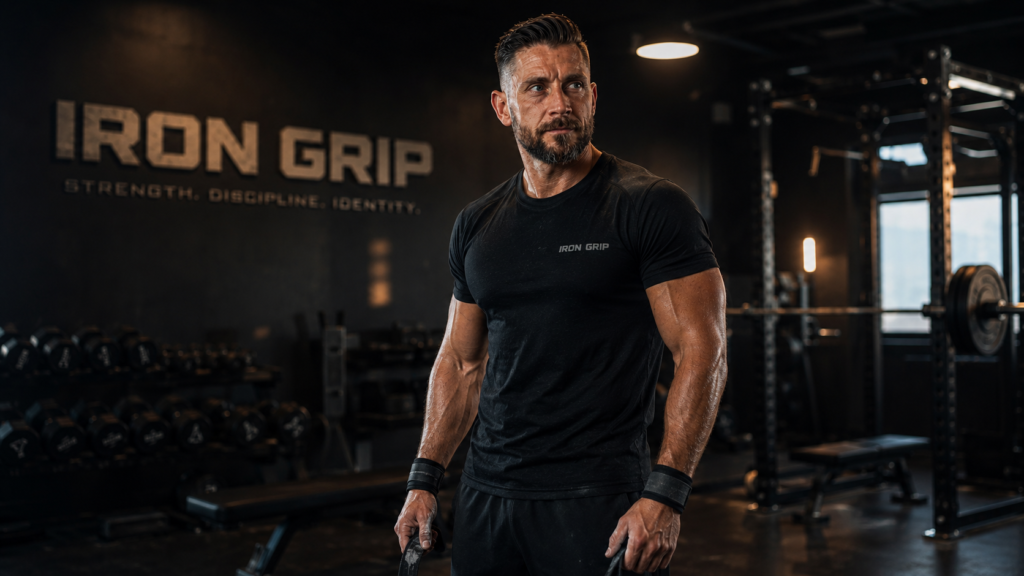
If grip strength is something you’ve been neglecting — which most people have — my Iron Grip ebook covers everything I know about building serious grip strength from the ground up. Grab it and get to work.
I’m also putting the finishing touches on a fitness app that will be available to download soon. Keep an eye out for that.
Stay strong.
Lee
Disclaimer: I’m a qualified Sports Massage Therapist with over 20 years of training experience, but I’m not a doctor. Always consult a healthcare professional before starting any new supplement protocol, particularly if you have existing health conditions or take medication.